2026-11-13
Hypertrophic Double Eyelid Revision: Lowering 'Sausage Eyes' with the Double-Line Technique
A guide to revising a thick, high 'sausage eye' double eyelid: why it happens, how the crease is lowered based on remaining skin, and when the double-line technique is used.
“
My double eyelid is too high and thick, and it clearly looks like I've had surgery.
I've been told I don't have much extra skin. Can the crease still be lowered?
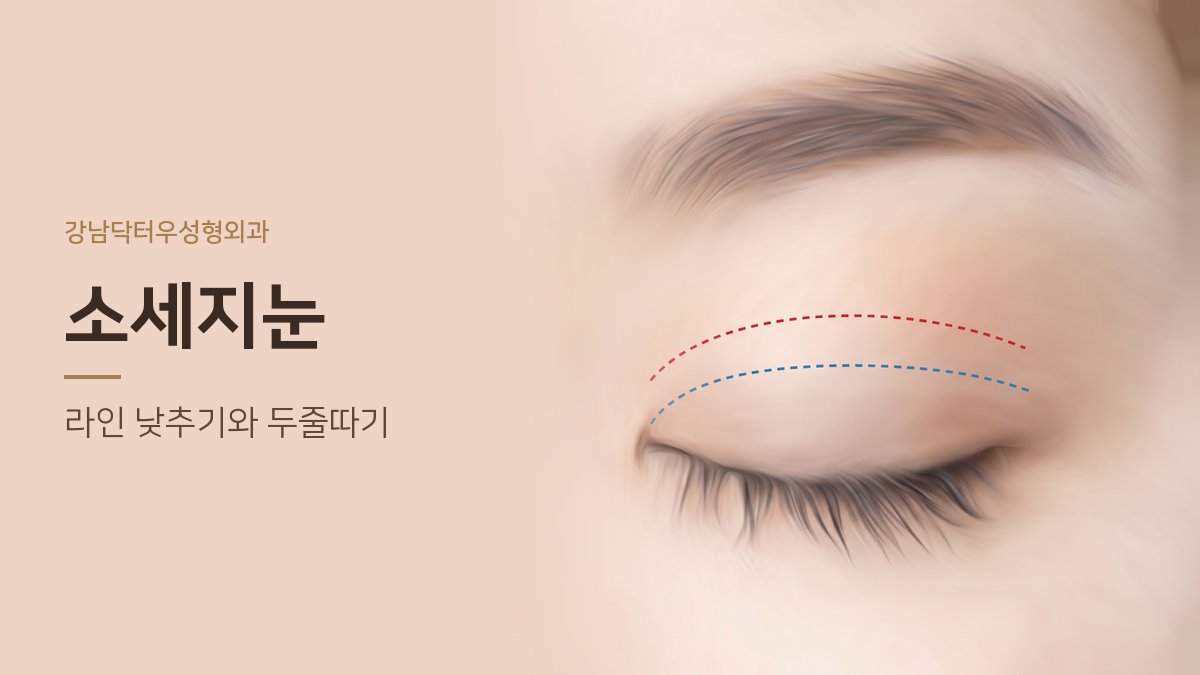
A double eyelid with a thick, puffy crease that makes the surgery obvious is commonly called a ‘sausage eyelid’ (eyelid hypertrophy, or hypertrophic double eyelid). A high crease can be lowered, but the method depends on how much skin remains.
Why does a sausage eyelid form?
The main causes we see at Gangnam Dr. Woo Plastic Surgery for hypertrophic double eyelids fall into three types, and the approach depends on which cause is involved.
• The fixation angle points downward relative to the crease height
The crease looks deep and thick when the eyes are open.
• The fixation is too strong
The crease is set deep, and the skin below it looks puffy.
• The double eyelid is too large for the eye-opening strength
The eye-opening strength is not enough to fold the crease up properly.
Right after surgery, swelling can make the crease look thicker and larger than it really is. If the thick appearance continues as if the swelling hasn't gone down even after enough time has passed, we check the cause.
These cases can also come with the mucosa near the lash line looking everted, or with one eye opening excessively wide. A Korean paper also identifies thickening below the crease as the biggest problem with high creases, and notes that Korean patients call this ‘sausage eyes.’
Who is a good candidate for crease lowering?
- · Those whose crease is thick and puffy, making the surgery look obvious
- · Those whose mucosa near the lash line looks everted due to strong fixation
- · Those with a high crease and a narrow space between the brow and the eye, leaving little extra skin — in these cases, the double-line technique is considered.

How is a high crease lowered?
The key factor in choosing the method is how much extra skin remains. The narrower the space between the brow and the eye, the less skin can be removed. Even when the crease needs to be lowered significantly, the double-line technique can be considered.
When there is enough skin — revision to lower the crease
- · The incision includes the original incision line.
- · A moderate amount of skin below the crease is removed.
- · The high-fixed crease is released and re-fixed at a lower position.

The three steps for lowering the crease are shown in order. Illustration for explanation (AI-assisted).
When there is little skin — the double-line technique
Normally, the skin is removed including the previous incision scar. However, if there isn't enough skin and too much is cut away, the eyelid may be pulled tight, making it harder for the eye to close fully or causing dryness. In this case, the existing double-eyelid scar is left as is, the large crease is released, and a new, smaller crease is created below it.
If only the adhered tissue is released and a new crease is created, the old crease may re-adhere, causing two lines to be visible. To keep the existing crease from re-adhering, we also perform a fat transfer, placing fat between the two creases. If the old crease is visible early after surgery, it may be a temporary fold caused by swelling, so we monitor how it progresses.

1 shows creating the new crease, and 2 shows fat transfer. Illustration for explanation (AI-assisted).
When eyelid-opening correction is also needed
If your eyes have weak eye-opening strength, making the double eyelid look large, eyelid-opening correction alone can improve eye-opening strength, making the double eyelid look smaller. There are also reports of studies showing that the width of the double eyelid decreased after eyelid-opening correction.
However, not every revision requires eyelid-opening correction. We first check eye-opening strength and any left-right difference, and only plan it together when needed. If the previous surgery caused significant damage to the aponeurosis (the membrane at the end of the muscle) and the gliding fat layer, we plan eyelid-opening correction revision and fat transfer alongside the double-line technique. The gliding fat layer is the layer of fat that lets the skin and muscle slide smoothly when the eye opens.
Expected changes
• Crease height
As the crease is lowered, its puffy thickness may be reduced. In a Korean study (256 patients, about half of whom also underwent eyelid-opening correction) in which new incisions were made at a lower position, the average crease height decreased from 13.5 mm to 7.8 mm. Note that this study used a different method than ours.
• Mucosa near the lash line
Releasing excessive fixation may reduce how much the everted mucosa is visible.
• Eye-opening appearance
Matching eye-opening strength may make the amount of visible iris more even.

Side effects and post-surgery care
After lowering the crease or undergoing the double-line technique, the following reactions or side effects may occur.
- · Swelling and bruising — Most people experience these, and they subside over time. Until the swelling goes down, the crease may look high.
- · Bleeding, hematoma, inflammation — may occur.
- · Left-right asymmetry, differences in crease height — may occur.
- · The existing crease re-folds or an extra line appears — may occur after the double-line technique.
- · Excess skin remains and needs to be trimmed further — may occur.
- · Visible scarring, incomplete eye closure or dryness — may occur.
- · Additional surgery may be needed — may occur.
In the early days after surgery, applying cold compresses and keeping your head slightly elevated while sleeping can help reduce swelling. Avoid alcohol, smoking, saunas, and strenuous exercise for a while. Do not rub or press hard on your eyes. Follow your doctor's guidance for washing your face, applying makeup, and wearing contact lenses.
Recovery time and pace vary from person to person after revision surgery. It's more important to follow your own progress than to compare yourself with others.
If you have any questions Please contact us right away if your vision suddenly blurs after surgery or if pain, bleeding, or swelling becomes severe. If you know when and how your previous surgery was done, sharing that information will help with diagnosis. Phone consultation: 055-338-7585. |
In closing
If you're looking into lowering a sausage eyelid, check how much skin you have left and your eye-opening strength before looking at review photos. Even with a similarly high crease, the revision method varies depending on the remaining skin and the technique used in the previous surgery. The cost and recovery period for the double-line technique depend on your condition, so we will explain them during your consultation after examination.
Frequently asked questions
Q. Doesn't the double-line technique make the eyelid look like it has two lines?
When your eyes are open, the newly created lower line becomes your double eyelid. When your eyes are closed, the old incision scar and the new incision line may both be visible. The goal is to release the existing crease and move fat so it doesn't fold again. How visible the scars are depends on your skin condition.
Q. How much can the crease be lowered?
It depends on how much skin remains and your eye-opening strength, so it's difficult to give a specific number. During your examination, we check the distance between the brow and the eye and your eye-opening strength before deciding on the height.
Consultation and booking
Phone consultation / Booking
055-338-7585
You can also request a consultation through the KakaoTalk Channel Gangnam Dr. Woo Plastic Surgery. Costs will be explained during your consultation after examination.
Hours
Mon–Thu: 10:00 AM – 7:00 PM
Fri: 10:00 AM – 9:00 PM
Sat: 10:00 AM – 5:00 PM
Lunch break: 1:00 PM – 2:00 PM
Directions
2F, Academy Building, 35 Naeoe Jungang-ro, Gimhae-si, Gyeongsangnam-do
It's a 12-minute walk from Exit 1 of Surowangneung Station on the Gimhae Light Rail. For parking, please use Green Parking Lot (12, Hambak-ro 101beon-gil, Gimhae-si). View on Naver Map
This article is general information prepared by Gangnam Dr. Woo Plastic Surgery based on in-house treatment guidance and abstracts of papers indexed in PubMed. It does not guarantee diagnosis or treatment outcomes. All cited studies are results from other medical institutions and are not results from our clinic. The effects and recovery periods of surgeries and procedures may vary depending on individual conditions, and side effects such as swelling, bruising, bleeding, and inflammation may occur. For details, please consult a board-certified plastic surgeon during your visit.
#SausageEyes #CreaseLowering #HypertrophicDoubleEyelid #HypertrophicDoubleEyelidRevision #HypertrophicDoubleEyelidCauses #HypertrophicDoubleEyelidConsultation #HypertrophicDoubleEyelidSideEffects #DoubleLineTechniqueConsultation #DoubleLineTechniqueSideEffects #DoubleLineTechniqueRevision #DoubleLineTechniqueCost #DoubleLineTechniqueRecovery #SausageEyelid #EyelidHypertrophy #DoubleLineTechnique #EyelidCreaseLowering #HighDoubleEyelid #DoubleEyelidRevision #EyeRevisionSurgery #PuffyDoubleEyelid #MucosaExposure #FatTransfer #EyelidOpeningCorrectionRevision #GangnamDrWooPlasticSurgery